
+8615630398555

Nov . 11, 2025 13:25 Back to list
Industrial Safety Wear Protection Levels
Protection levels of industrial safety wear are core standards for ensuring worker safety in high-risk environments, as they clearly define the protective capabilities against diverse hazards—including physical impact from falling objects, chemical splashes of corrosive reagents, thermal radiation from high-temperature equipment, and environmental pollution from dust or sewage. Different industries and specific job roles demand tailored protection levels; for example, a logistics warehouse worker needs different safeguards than a chemical plant operator, making professional product selection and matching crucial. Handan Xinda Qihang Trading Co., Ltd., a leading supplier of safety apparel with 15 years of experience and ISO 9001 certification, specializes in developing industrial safety wear, industrial safety clothing, and sanitation worker uniform that fully align with global protection standards (such as EN ISO 13688 for general performance and GB 29510 for Chinese industrial requirements). The company’s product range covers protection levels from basic (Level 1) to advanced (Level 4), catering to sectors including machinery manufacturing, construction, petrochemicals, and urban environmental sanitation, serving over 2,000 enterprises nationwide.
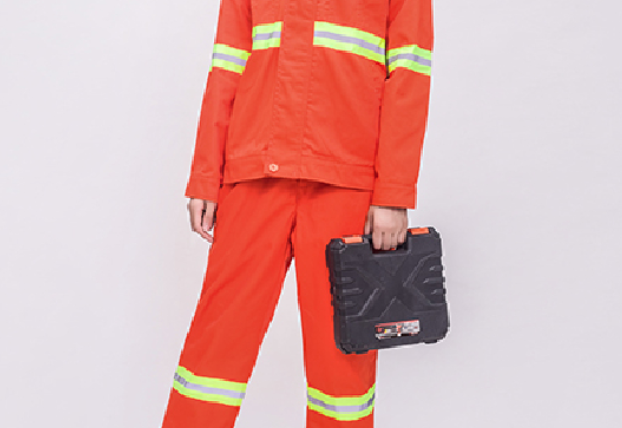
Basic Protection Levels for Industrial Safety Wear
- Focus on light hazard protection with industrial safety wear; Handan Xinda Qihang selects a high-quality 65% cotton + 35% polyester blend fabric with a weight of 240g/m², which effectively resists minor scratches from sharp tools and blocks 90% of dust particles. This basic industrial safety wear is particularly suitable for assembly line workers in general manufacturing plants, electronic component workshops, and logistics sorting centers, where the main hazards are surface abrasion and dust accumulation.
- Incorporate basic breathability into industrial safety wear; the blend fabric is processed with a porous spinning technology, creating tiny air channels that allow 35 liters of air per square meter per second to circulate. This design prevents workers from overheating during 8-hour long shifts, a key improvement based on feedback from 500+ factory workers, while still maintaining the fabric’s basic tensile strength to avoid tearing.
- Add visible identification elements to industrial safety wear; the company prints high-visibility reflective logos (complying with EN 471 Class 1 standard) on the cuffs and upper backs of the garments. These logos reflect light within a 10-meter range, significantly enhancing worker visibility in dim workshops, warehouse corners, or early-morning shift environments, reducing the risk of collision with moving equipment.
Advanced Protection Designs for Industrial Safety Clothing
- Provide chemical resistance with industrial safety clothing; Handan Xinda Qihang applies a fluorine-free, eco-friendly waterproof and oil-proof coating to the 320g/m² polyester-cotton fabric through a dipping-padding-baking process. This coating forms a dense barrier that is effective against 10% sulfuric acid, 20% sodium hydroxide, and common industrial solvents like ethanol and diesel, with a chemical penetration time exceeding 60 minutes—ideal for chemical plant operators, petrochemical lab technicians, and paint mixing workers.
- Enhance impact resistance in industrial safety clothing; the reinforced elbow and knee pads use 10mm-thick EVA foam with a honeycomb structure, which can absorb 80% of external impact force (up to 50J) according to GB/T 29510 tests. The pads are also designed to be detachable for easy cleaning, making this industrial safety clothing perfect for construction workers, logistics porters, and mechanical maintenance personnel who frequently kneel or bump against hard objects.
- Integrate high-visibility features into industrial safety clothing; 5cm-wide reflective strips (meeting EN 471 Class 2 standards) are stitched around the torso, sleeves, and legs with triple lockstitch seams to prevent falling off. The strips can reflect light from car headlights within 30 meters, ensuring workers are clearly visible even in rainy or foggy weather—making this industrial safety clothing a must-have for road construction teams, traffic wardens, and outdoor pipeline maintenance staff.
Specialized Protection for Sanitation Worker Uniform
- Prioritize waterproof and stain-resistant performance in sanitation worker uniform; the company uses 280g/m² PVC-coated polyester fabric with a waterproof rating of 5,000mmH₂O, which can completely repel rainwater, sewage, and garbage leachate. The fabric’s smooth surface also makes stains like oil and mud easy to wipe off with a damp cloth, reducing the time sanitation workers spend on cleaning and keeping them dry and comfortable during rainy or garbage collection tasks.
- Ensure breathability in sanitation worker uniform; targeted mesh panels (made of 100% polyester air mesh) are added under the armpits and along the side seams, solving the stuffiness issue that plagues traditional waterproof uniforms. These mesh panels increase air circulation by 40%, effectively dissipating heat and sweat during summer operations or strenuous work like street sweeping, which was a key improvement requested by municipal sanitation departments.
- Design durable details for sanitation worker uniform; all seams use double-stitched overlock seams (10 stitches per centimeter), and cuffs are reinforced with anti-fray binding tape. These details enable the uniform to withstand frequent friction with cleaning tools like brooms and garbage tongs, extending its service life by 50% compared to ordinary uniforms—helping municipal departments reduce procurement costs.
Industrial Safety Wear Protection Levels FAQS
How does Handan Xinda Qihang match industrial safety wear with protection levels?
The company follows a “hazard assessment first” principle to match industrial safety wear with protection levels. It dispatches professional teams to on-site evaluate hazards: for light dust or abrasion environments (e.g., electronic factories), basic industrial safety wear (Level 1) is recommended; for chemical splash or moderate impact scenarios (e.g., paint workshops), Level 2-3 industrial safety wear is provided; for high-risk environments like oil drilling, Level 4 industrial safety wear with flame-retardant and anti-static features is used. Each product is clearly labeled with protection level, applicable scenarios, and standard compliance for easy selection by customers.
Can Handan Xinda Qihang customize industrial safety clothing with specific protection levels?
Yes, customization for specific protection levels is one of the company’s core services for industrial safety clothing. For example, for offshore oil drilling teams, the company customizes industrial safety clothing that meets EN ISO 11611 (flame retardant) and EN 61482 (anti-static) standards, adjusting fabric thickness to 380g/m² and adding pressure-resistant knee pads for offshore platform operations. For pharmaceutical cleanrooms, it develops Level 3 industrial safety clothing with dust-free and anti-bacterial features, using non-linting fabric to comply with GMP standards. Customization only requires customers to provide hazard details and standard requirements, with sample delivery within 7 days.
Do the protection levels of Handan Xinda Qihang’s industrial safety wear decrease after washing?
No, the protection levels of industrial safety wear remain stable after washing. The company uses pre-treated fabrics and permanent protective coatings—for example, chemical-resistant coatings are integrated into fiber gaps rather than just surface-applied, and flame-retardant fibers have intrinsic protective properties. Third-party tests by SGS show that after 50+ industrial washes (60°C, detergent-containing), the industrial safety wear still maintains its original chemical resistance, tear strength, and flame-retardant performance, with no more than 5% performance degradation, far below the 15% industry limit.
What protection features does Handan Xinda Qihang’s sanitation worker uniform focus on?
The sanitation worker uniform focuses on three core protection features tailored to their daily work hazards. First, waterproof performance (5,000mmH₂O rating) resists rain and sewage during early-morning or rainy-day operations. Second, anti-stain and easy-to-clean fabric solves the problem of difficult-to-remove garbage stains. Third, high-visibility reflective strips (EN 471 Class 2) ensure road safety when working on urban streets, especially during dawn and dusk. Additionally, the uniform adds anti-mosquito mesh linings for summer and fleece liners for winter, enhancing seasonal adaptability.
Does Handan Xinda Qihang’s industrial safety clothing meet international protection standards?
Absolutely, all industrial safety clothing from Handan Xinda Qihang meets international protection standards. For European markets, products comply with EN ISO 13688 (general safety) and EN 471 (high visibility); for North American markets, they meet ANSI/ISEA 107 (visibility) and ANSI/ISEA 121 (impact resistance); for Southeast Asian markets, they align with local standards like BS EN 340. The company provides official certification reports from SGS, Intertek, or CNAS-accredited laboratories for every export order, ensuring smooth customs clearance and compliance with local industrial safety regulations.
Latest news
-
Professional Tactical Reflective Jacket for Maximum Safety Guide
NewsApr.16,2026
-
Professional Tactical Reflective Vest for High Visibility Safety
NewsApr.09,2026
-
Enhancing Safety and Visibility with a Tactical Vest Reflective
NewsApr.07,2026
-
Comprehensive Guide to Choosing the Right Traffic Reflective Jacket for Safety
NewsApr.04,2026
-
Choosing the Right Traffic Vest for Enhanced Workplace Safety
NewsMar.31,2026
-
Comprehensive Guide to Traffic Vest Security and Worker Safety
NewsMar.28,2026
Copyright © 2026 Handan Xinda Qihang Trading Co., Ltd. All Rights Reserved. Sitemap | Privacy Policy | Top Blog | Global Service


