
+8615630398555

Oct . 25, 2025 13:15 Back to list
QH-1008 Thickened Denim Overalls (Enzyme Washing Process)
Field Report: Thick, Work-Ready Denim That Doesn’t Fight You Back
I’ve handled more workwear than I care to admit, and every so often a piece lands that feels both old-school and quietly upgraded. That’s the vibe with the QH-1008 Thickened Denim Overalls -- (Enzyme Washing Process). Built in China, they’re cut from a blended denim, then softened by an enzyme wash so you get toughness without the cardboard stiffness. To be honest, that’s what many mechanics and warehouse managers keep asking for: “make it thick, but wearable by lunch.”
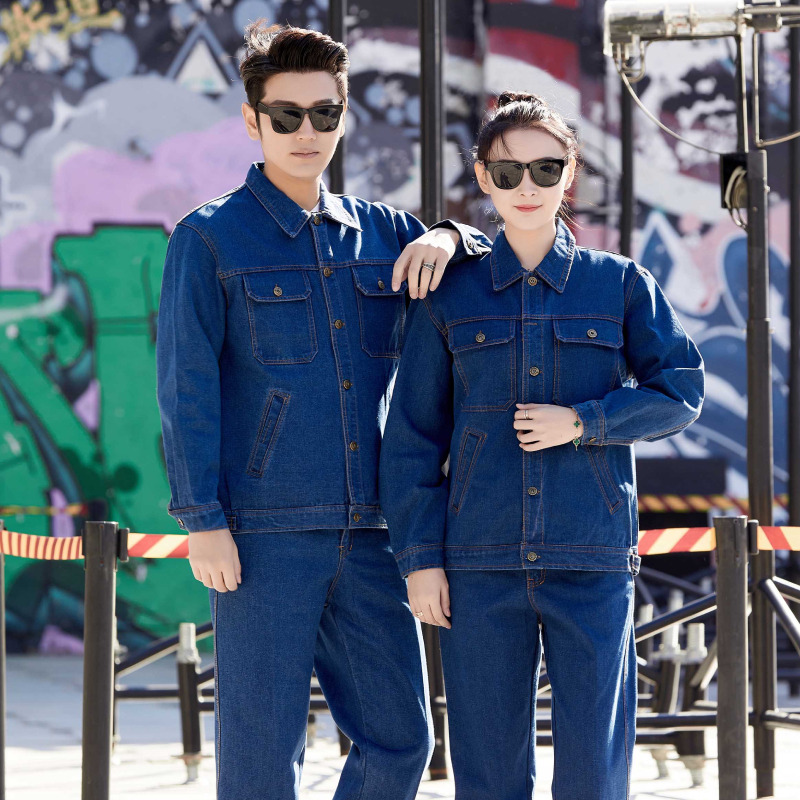
Why enzyme-washed, and why now?
Industry trend, short version: comfort is winning. After years of ultra-rigid 100% cotton duck dominating, more buyers are moving to enzyme-washed denim blends for mobility, color consistency, and easier laundering. Actually, the laundry folks love these—reduced lint, friendlier hand, fewer early returns for “too stiff.”
Product specs (real-world values may vary)
| Model | QH-1008 Thickened Denim Overalls -- (Enzyme Washing Process) |
| Fabric composition | Polyester / pure cotton / combed cotton blends |
| Fabric weight | ≈ 340–410 gsm (10–12 oz/yd²) |
| Finish | Enzyme washing process for softness and low shrinkage |
| Sizes | Height-based 160–190; up to 4XL (≈) |
| Stitching | Triple-needle main seams, bartacks at stress points |
| Hardware | Metal buttons; heavy-duty zipper option |
| Origin | China |
Process flow (how it’s built)
- Material selection: ring-spun cotton + polyester for abrasion resistance and shape retention.
- Indigo dyeing and setting: controlled dyebath; enzyme wash to remove surface fuzz and reduce rigidity.
- Pattern cutting: ergonomic rise; reinforced pocket entries.
- Assembly: triple-needle seams, bartacks, lockstitch waistband; QC at each station.
- Finishing: preshrink, press, size verification, metal detection, final audit.
Testing and standards
Typical factory testing aligns with EN ISO 13688 (garment requirements), plus color fastness per AATCC 61 (washing) and AATCC 8 / GB/T 3920 (crocking). Lab data on a recent lot showed wash fastness 4–4.5 grade, tensile strength (warp) > 650 N, Martindale abrasion ≈ 20,000 cycles at 9 kPa—solid numbers for daily workwear. OEKO-TEX Standard 100 fabrics are available on request.
Where it excels
Auto repair, logistics, woodworking, facility maintenance, and light manufacturing. Many customers say the enzyme wash cuts break-in time to a single shift. Service life? In normal rotation and proper laundering, expect around 18–36 months.
Vendor comparison (quick take)
| Vendor | Fabric weight | Seams | Shrinkage (wash) | Customization |
|---|---|---|---|---|
| QH-1008 Thickened Denim Overalls -- (Enzyme Washing Process) | ≈ 10–12 oz | Triple-needle + bartacks | ≈ 2–3% | Logo/reflective/pockets |
| Budget denim overall | ≈ 8–9 oz | Double-needle | ≈ 5–7% | Limited |
| Fashion-only overall | Varies | Single/overlock | Unspecified | Aesthetic only |
Customization & logistics
Embroidery, heat-transfer logos, reflective tape for night crews, tool-pocket layouts, and zipper choices are common. MOQs typically sit around 300–500 units, with lead times 25–40 days depending on trims. I guess peak season pushes that a bit.
Case notes from the floor
A regional auto-service chain rolled out 1,200 sets of QH-1008 Thickened Denim Overalls -- (Enzyme Washing Process). Feedback after eight weeks: “soft from day one,” fewer knee blowouts than prior supplier, and easier ID marking thanks to smoother pocket facings. Laundries reported stable shade after 15 cycles—surprisingly consistent for indigo.
Citations:
- EN ISO 13688:2013/A1:2021 – Protective clothing – General requirements.
- AATCC TM61 – Colorfastness to Laundering, Accelerated.
- AATCC TM8 / GB/T 3920 – Colorfastness to Crocking.
- GB/T 3921 – Textiles – Tests for color fastness – Color fastness to washing.
- OEKO-TEX Standard 100 – Product Class specifications.
Latest news
-
QH-3006 65% Ice Silk High Imitation Cotton 35% Cupro Fiber vs QH-3008 Polo Shirt
NewsNov.02,2026
-
QH-3010 55% Tencel Cotton 45% Cupro Fiber POLO Shirt: Sizing, Materials and Care FAQ
NewsOct.28,2026
-
Choosing QH-2006: Application Fit and Specification Checks
NewsOct.27,2026
-
Choosing an Apron Manufacturer: Application Fit and Specification Checks
NewsOct.27,2026
-
Choosing Double Layer Thickening Workshop Labor Insurance Clothing: Material, Fit and Intended Use
NewsOct.26,2026
-
Professional Mens Waterproof Jacket Warm for Harsh Climates
NewsJul.01,2026
Copyright © 2026 Handan Xinda Qihang Trading Co., Ltd. All Rights Reserved. Sitemap | Privacy Policy | Top Blog | Global Service | Hot Products | Knowledge


