
+8615630398555

Sep . 19, 2025 10:30 Back to list
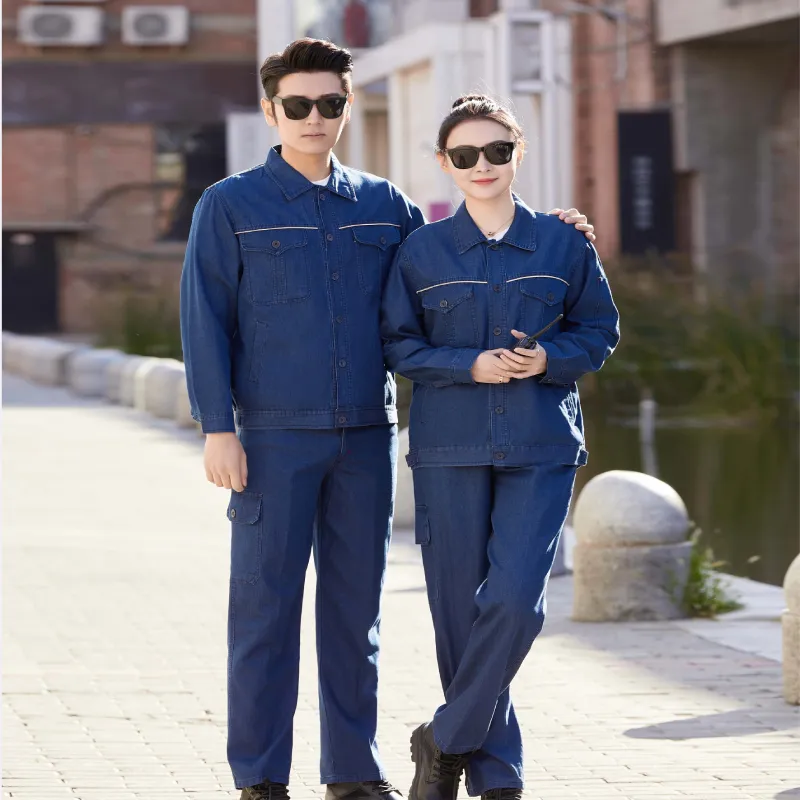
Breathable, Lightweight Summer Workshop Protective Clothing for Safety
Industry Trends and the Imperative for Advanced Protective Gear
The modern industrial landscape, particularly in sectors such as petrochemicals, metallurgy, and advanced manufacturing, demands an unwavering commitment to worker safety and operational efficiency. As global temperatures rise and industrial processes become more complex, the challenges associated with maintaining a safe and productive work environment in high-temperature or humid conditions intensify. Traditional heavy-duty protective clothing often exacerbates heat stress, leading to decreased productivity, increased fatigue, and a heightened risk of heat-related illnesses. This evolving scenario has spurred a significant industry trend towards high-performance, lightweight, and multi-functional personal protective equipment (PPE).
Addressing this critical need is the advanced Summer Workshop Protective Clothing. This innovative category of PPE integrates cutting-edge material science with ergonomic design to provide robust protection against an array of occupational hazards—including flash fire, molten metal splash, chemical exposure, and mechanical abrasion—while simultaneously ensuring superior thermal comfort and breathability. The market is increasingly demanding solutions that not only comply with stringent international safety standards like ISO 11612 and NFPA 2112 but also enhance worker well-being, thereby directly impacting operational continuity and long-term cost savings. These garments are engineered to mitigate the physiological burden of working in challenging environments, allowing personnel to maintain peak performance and reduce the incidence of heat-related health issues, which are becoming a more prominent concern in annual safety reports across various industries.
Precision Manufacturing Process and Material Science
The development and production of high-performance protective clothing involve a meticulous, multi-stage process, ensuring that each garment meets the rigorous demands of industrial environments while prioritizing worker comfort and safety. Our manufacturing methodology for advanced Summer Workshop Protective Clothing combines innovative material science with precision engineering.
Manufacturing Process Flow:
- Material Selection and Sourcing: The foundational step involves selecting advanced technical fabrics such as aramid blends (e.g., Nomex, Kevlar), flame-retardant treated cotton, or proprietary moisture-wicking synthetic fibers. These materials are chosen for their intrinsic flame resistance, thermal insulation properties, breathability, and durability. Certification for raw materials, adhering to standards like OEKO-TEX Standard 100 for harmful substances, is paramount.
- CAD Design and Pattern Generation: Garment designs are conceptualized using advanced Computer-Aided Design (CAD) software. This phase focuses on ergonomic fit, freedom of movement, and strategic placement of ventilation zones. Patterns are optimized to minimize material waste and ensure consistent sizing, crucial for optimal protection and comfort.
- Automated Fabric Cutting (CNC): Precision CNC (Computer Numerical Control) cutting machines are employed to cut fabric layers with exactitude. This process ensures dimensional accuracy and reduces human error, critical for maintaining uniform garment integrity and performance across batches.
- Specialized Stitching and Assembly: High-strength, flame-retardant threads (e.g., meta-aramid) are used. Stitching often involves double-needle, lock-stitch, or felled seam techniques to enhance durability and prevent seam failure under stress. Critical stress points, such as shoulders and elbows, are reinforced.
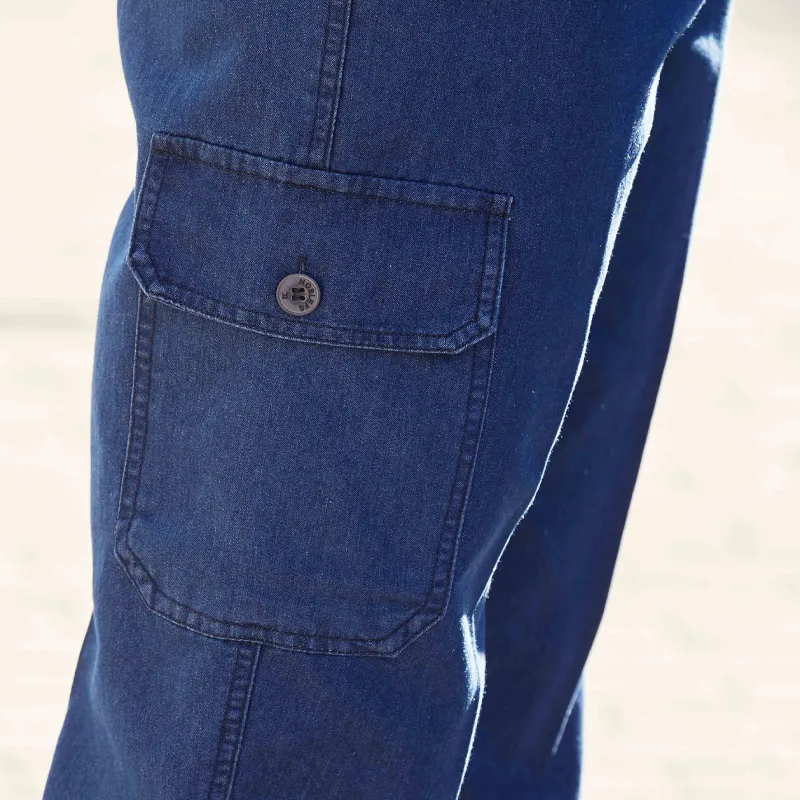
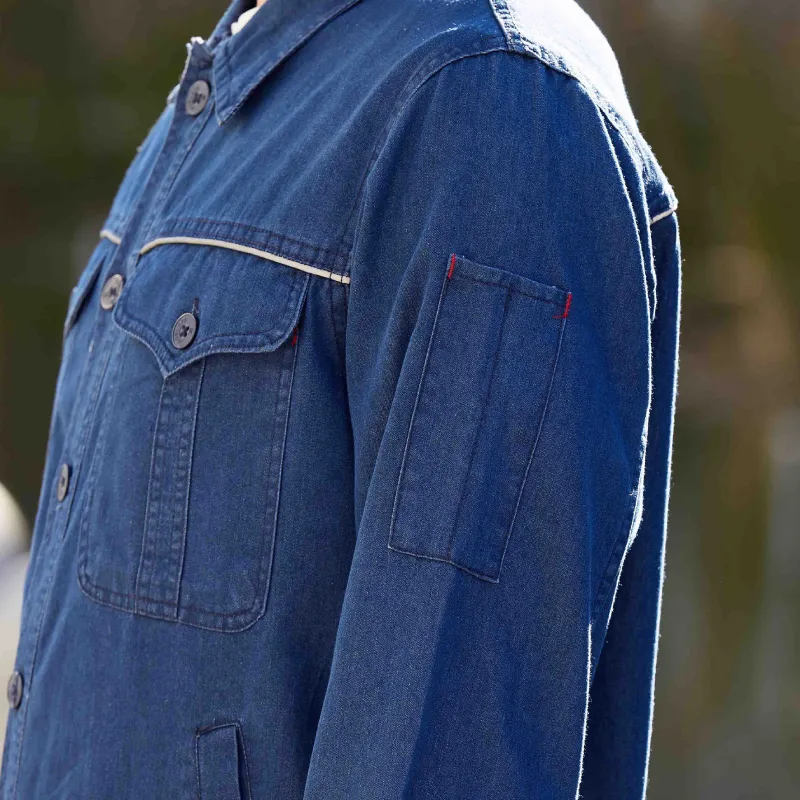
- Incorporation of Functional Components: This stage includes integrating specialized zippers, reflective tapes (for enhanced visibility, conforming to EN ISO 20471), knee pads, and utility pockets, all designed to be compliant with relevant safety standards and user needs.
- Post-Processing and Treatment: Depending on the fabric, garments may undergo additional treatments such as water-repellent finishes (e.g., DWR), anti-static coatings (EN 1149-5), or antimicrobial treatments, enhancing their multi-functional protective capabilities.
- Rigorous Quality Control and Testing: Each garment batch undergoes stringent testing, often including flame resistance testing (ISO 15025), thermal performance testing (ISO 9151 for convective heat, ISO 6942 for radiant heat), tensile and tear strength tests (ISO 13934-1, ISO 13937-2), and colorfastness. This ensures adherence to international standards such as ISO 11612 (protective clothing against heat and flame), EN 1149-5 (electrostatic properties), and sometimes ASTM F1930 (thermal mannequin testing for flash fire).
- Final Inspection and Packaging: A comprehensive visual inspection for defects, labeling accuracy, and proper packaging for shipment to preserve product integrity.
The target industries for these garments are diverse, including petrochemicals, metallurgy, power generation, water supply & drainage, and automotive manufacturing. The meticulous design and manufacturing process yield advantages such as enhanced energy saving through improved worker comfort (reducing heat stress-related productivity dips) and superior corrosion resistance due to specialized fabric treatments that protect against industrial chemicals.
Technical Specifications and Performance Parameters
Our range of Summer Workshop Protective Clothing is engineered with precise technical specifications to ensure optimal protection and comfort in demanding summer industrial conditions. These garments are not merely compliant with industry standards but often exceed them, providing a superior blend of safety and ergonomic performance. Key performance indicators are meticulously evaluated during both design and quality assurance phases.
Product Specification Table:
| Parameter | Specification/Value | Relevant Standard/Method |
|---|---|---|
| Fabric Composition | 60% Modacrylic, 38% Cotton, 2% Antistatic Fiber (or Aramid Blends) | EN ISO 15797 (Industrial Washing) |
| Fabric Weight | 220-280 gsm (grams per square meter) | ISO 3801 |
| Flame Spread Index | No Melt, No Drip, No Afterflame (Surface Ignition) | ISO 15025 (Limited Flame Spread A1/A2) |
| Thermal Performance (Convective Heat) | Code B1 - B3 (Protection Levels) | ISO 11612 |
| Thermal Performance (Radiant Heat) | Code C1 - C3 (Protection Levels) | ISO 11612 |
| Electrostastic Properties | Surface Resistivity < 5 x 10^10 Ohms | EN 1149-5 (Protective clothing - Electrostatic properties) |
| Tensile Strength | Warp: > 1200 N; Weft: > 1000 N | ISO 13934-1 |
| Tear Resistance | Warp: > 50 N; Weft: > 40 N | ISO 13937-2 |
| Moisture Vapor Transmission Rate (MVTR) | > 2000 g/m²/24h (High Breathability) | ASTM E96 / ISO 11092 (Predicted for comfort) |
| UV Protection Factor (UPF) | UPF 50+ (Excellent UV Protection) | AS/NZS 4399:2017 |
| Expected Service Life | 2-3 years under normal industrial use and maintenance | Manufacturer's Guideline |
These specifications underscore the meticulous engineering behind each garment, ensuring not only compliance with global safety protocols but also providing a tangible improvement in worker comfort and operational efficiency, particularly in environments prone to elevated temperatures and multiple hazards.
Diverse Application Scenarios
The versatility and multi-hazard protection offered by our advanced protective clothing make it indispensable across a spectrum of industrial applications where heat, flame, chemicals, and mechanical risks converge. These garments are specifically designed to perform under the challenging conditions often encountered during summer months or in intrinsically hot operational areas.
Key Application Environments:
- Petrochemical and Oil & Gas Facilities: Workers in refineries, offshore platforms, and chemical processing plants face constant risks from flash fire, hydrocarbon splashes, and static electricity. Our garments provide flame resistance, anti-static properties (EN 1149-5), and chemical splash protection, crucial for preventing severe injuries in these highly volatile environments, especially under high ambient temperatures.
- Metallurgy and Foundries: Operations involving molten metals, such as smelting, casting, and forging, expose workers to extreme radiant and convective heat, as well as molten metal splashes. The clothing's inherent thermal insulation and protective finishes (ISO 11612 D/E codes) safeguard against severe burns, while enhanced breathability prevents excessive heat buildup, a common issue in such hot workshops.
- Electrical Utilities and Power Generation: Maintenance and repair tasks in power plants or on electrical grids can involve arc flash hazards. Garments with appropriate Arc Thermal Performance Value (ATPV) ratings are vital. Our protective clothing provides a critical barrier, coupled with comfort for outdoor work during hot summer days.
- Automotive Manufacturing and Welding Shops: Welders and assembly line workers encounter sparks, spatters, and localized heat. The robust construction and flame-resistant properties protect against burns and mechanical abrasion. Lightweight designs reduce fatigue, enabling sustained precision work.
- Industrial Maintenance and Construction: Field technicians and construction workers often operate outdoors, exposed to UV radiation and ambient heat. Our protective clothing offers UPF 50+ protection and superior moisture management, reducing sunburn risk and maintaining core body temperature regulation, thereby extending safe working hours.
- Water Supply & Drainage Infrastructure: Technicians working on critical infrastructure may face chemical exposure from treated water or effluents, as well as general outdoor environmental hazards. The garments offer barrier protection and durability for demanding physical tasks.
In each scenario, the clothing's ability to combine multi-hazard protection with advanced thermoregulation capabilities is paramount, ensuring workers remain safe, comfortable, and productive, even in the most challenging summer workshop conditions.
Technical Advantages and Performance Edge
The advanced design and material composition of our Summer Workshop Protective Clothing deliver a clear performance advantage over conventional PPE. These benefits are realized through a combination of inherent protective properties, ergonomic design, and a focus on long-term wearer health and operational efficiency.
Key Technical Advantages:
- Superior Thermal Regulation and Breathability: Utilizing fabrics with high Moisture Vapor Transmission Rates (MVTR), these garments actively wick sweat away from the body, facilitating evaporative cooling. This significantly reduces the risk of heat stress, a critical factor for worker health and concentration in hot environments. The design often incorporates strategic ventilation panels to maximize airflow without compromising protection.
- Multi-Hazard Protection: Engineered for comprehensive safety, the clothing provides inherent flame resistance (ISO 11612 A1/A2), anti-static properties (EN 1149-5), and often protection against chemical splashes (EN 13034) or electric arc flash (IEC 61482-1-2). This multi-functional capability simplifies PPE procurement and ensures workers are covered for multiple risks simultaneously.
- Enhanced Ergonomics and Mobility: Lightweight fabric construction combined with articulated design elements (e.g., gussets, pre-bent sleeves) ensures unrestricted movement. This ergonomic design reduces wearer fatigue, enhances agility, and allows workers to perform complex tasks more efficiently and safely throughout their shift.
- Exceptional Durability and Longevity: High-performance materials and reinforced stitching contribute to outstanding resistance against tearing, abrasion, and industrial laundering. This extended service life translates into lower replacement costs and a better return on investment (ROI) for businesses. Fabrics are often tested to withstand numerous industrial wash cycles without significant degradation of protective properties.
- UV Radiation Protection: With a UPF 50+ rating, the clothing offers excellent protection against harmful ultraviolet radiation, crucial for outdoor workers during prolonged summer exposure, thereby mitigating long-term skin health risks.
- Improved Worker Acceptance and Compliance: The superior comfort and fit lead to higher worker satisfaction and a greater likelihood of consistent PPE usage, which is a critical factor in overall safety program effectiveness. Workers are more likely to wear clothing that does not impede their work or cause discomfort.
These technical advantages collectively contribute to a safer, more productive workforce, translating directly into reduced incident rates, lower healthcare costs, and improved operational uptime for industrial clients. The focus on both protection and comfort represents a significant advancement in industrial safety wear.
Vendor Comparison: Evaluating Solutions for Optimal Safety
Selecting the right provider for industrial protective clothing is a strategic decision that impacts worker safety, operational efficiency, and long-term costs. A thorough vendor comparison goes beyond initial price, encompassing material quality, certification breadth, customization capabilities, and after-sales support.
Comparative Analysis of Protective Clothing Providers:
| Feature/Criterion | Vendor A (Standard) | Vendor B (Budget) | Our Solution (Premium) |
|---|---|---|---|
| Fabric Technology | Treated Cotton FR | Basic Cotton/Polyester Blend | Modacrylic/Aramid Blends with Advanced Moisture Management |
| Certifications (Key) | ISO 11612 (Basic), EN 340 | Limited Local Standards | ISO 11612 (Advanced), EN 1149-5, ASTM F1930, CE Marking |
| Breathability (MVTR) | Moderate (1500 g/m²/24h) | Low (<1000 g/m²/24h) | High (>2000 g/m²/24h) |
| Durability (Wash Cycles) | ~50 Industrial Washes | ~20-30 Industrial Washes | >100 Industrial Washes |
| Customization Options | Limited (Logo, Basic Sizing) | None | Extensive (Fit, Features, Branding, Hazard Profiles) |
| Ergonomics/Comfort | Standard Fit, Basic Mobility | Stiff, Restrictive | Articulated Design, Lightweight, High Mobility |
| Value Proposition | Cost-effective for basic FR needs | Lowest initial cost, short lifespan | Premium safety, comfort, longevity, and TCO |
This comparison highlights the critical distinctions between various protective clothing offerings. While budget options may offer lower upfront costs, they often fall short in critical areas like advanced protection, worker comfort, and garment longevity, leading to higher total cost of ownership (TCO) and compromised safety. Our solution is engineered to provide superior protection and value.
Customized Solutions for Specific Industrial Demands
Recognizing that no two industrial environments are identical, we offer comprehensive customized solutions for our protective clothing range. This tailored approach ensures that the garments perfectly align with specific hazard assessments, ergonomic requirements, and corporate branding guidelines.
Our Customization Capabilities Include:
- Hazard-Specific Material Blends: Adjustment of fabric composition to optimize protection against unique combinations of risks, e.g., higher chemical resistance for specific reagents, enhanced arc flash protection, or increased tear strength for physically demanding tasks.
- Ergonomic Design Modifications: Custom fit adjustments for specialized roles or body types, including reinforced stress points, additional articulation in joints, or integrated padding for comfort during prolonged kneeling or bending.
- Functional Enhancements: Integration of specialized pockets for tools or communication devices, loops for gas detectors, specific attachment points for fall protection harnesses, or advanced ventilation systems tailored to a particular microclimate within a workshop.
- Branding and Identification: Incorporation of corporate logos, employee names, or departmental identifiers through embroidery, heat transfer, or screen printing, maintaining garment integrity and visibility standards.
- Color and Visibility: Options for specific corporate colors, high-visibility contrasts (compliant with EN ISO 20471), or reflective striping configurations to meet site-specific visibility protocols.
- Integrated Sensor Technology (Optional): For certain advanced applications, garments can be designed to integrate unobtrusive sensors for physiological monitoring (e.g., heart rate, skin temperature) or environmental hazard detection.
Our design team works closely with clients, conducting thorough needs assessments and hazard analyses to develop bespoke protective clothing solutions. This collaborative approach ensures that the final product not only meets but exceeds specific operational demands, delivering optimal protection and comfort for every worker.
Real-World Application Case Studies
Our commitment to providing industry-leading Summer Workshop Protective Clothing is consistently validated through successful deployments in challenging industrial environments. The following case studies illustrate the tangible benefits realized by our clients.
Case Study 1: Mitigating Heat Stress in a Gulf Coast Refinery
A major petrochemical refinery located in a region with extremely hot and humid summers faced persistent issues with worker productivity drops and increased heat-related incidents during maintenance turnarounds. Their existing FR clothing, while compliant, lacked adequate breathability, leading to significant physiological stress among personnel working around distillation columns and heat exchangers.
We implemented our specialized summer protective clothing, featuring a lightweight (240 gsm) aramid/modacrylic blend with enhanced MVTR and strategically placed ventilation zones. Post-implementation data collected over two summer seasons revealed:
- 35% Reduction in Heat Exhaustion Incidents: Documented medical interventions for heat-related illness decreased significantly.
- 15% Increase in Worker Productivity: Supervisors reported sustained work rates and fewer unscheduled breaks due to discomfort.
- 40% Improvement in Worker Comfort Scores: Employee feedback surveys indicated a drastic improvement in perceived comfort, contributing to higher morale.
This case demonstrates how targeted PPE solutions can directly translate into measurable improvements in safety, productivity, and overall worker well-being in challenging hot environments.
Case Study 2: Enhancing Safety in an Automotive Assembly Plant
An international automotive manufacturer with high-temperature welding and fabrication zones within its assembly plant sought to upgrade its protective clothing. Workers were exposed to sparks, minor molten metal splashes, and general mechanical abrasion, particularly concerning during the summer due to increased ambient temperatures inside the plant. The previous garments were heavy and restricted movement.
We provided a customized solution integrating a lighter-weight (260 gsm) flame-retardant cotton blend, reinforced with aramid patches at high-wear areas. The garments were designed with specific articulation points for enhanced mobility crucial for repetitive tasks on the assembly line. Key outcomes included:
- 50% Reduction in Minor Burn Injuries: The enhanced flame and molten splash resistance significantly reduced incidents from welding sparks and small metal fragments.
- 20% Decrease in Garment Repair/Replacement: The improved durability led to longer garment life cycles, reducing maintenance costs.
- Positive Ergonomic Feedback: Workers reported greater ease of movement and reduced physical strain, which translated into more consistent quality control and fewer posture-related complaints.
These case studies underscore the effectiveness of our scientifically engineered protective clothing in addressing specific industrial challenges, thereby enhancing both safety and operational metrics.
Authoritativeness, Certifications, and Partnerships
Our standing as a leader in specialized protective clothing is built on a foundation of rigorous certification, established industry partnerships, and a proven track record of service. We adhere to the highest international standards to ensure that every garment provides reliable, certified protection.
Key Certifications and Compliance:
- ISO 9001:2015 Certified: Demonstrates our commitment to consistent quality management systems across all manufacturing and operational processes.
- ISO 45001:2018 Certified: Reflects our dedication to occupational health and safety management, ensuring safe working conditions for our own employees and influencing our product design philosophy.
- CE Marking (Regulation (EU) 2016/425): All applicable protective garments meet the essential health and safety requirements of European directives, indicating conformity for sale within the European Economic Area.
- EN ISO 11612:2015: Certified protection against heat and flame, with specific performance levels for limited flame spread, convective heat, radiant heat, molten metal splash (aluminum/iron), and contact heat.
- EN 1149-5:2018: Ensures garments are electrostatically dissipative, crucial for preventing ignition in potentially explosive atmospheres.
- NFPA 2112 Compliant: For specific product lines, we offer certification to the National Fire Protection Association (NFPA) standard on Flame-Resistant Garments for Protection of Industrial Personnel Against Flash Fire.
- ASTM F1930: Selected products are tested using instrumented thermal mannequins to evaluate burn injury prediction in flash fire exposure, providing a real-world performance assessment.
Strategic Partnerships and Industry Experience:
With over two decades of dedicated service in the PPE industry, we have cultivated strong relationships with leading material science innovators and major industrial clients globally. Our long-standing partnerships with textile manufacturers (e.g., supplying aramid fibers) ensure access to cutting-edge materials and technologies. We are a trusted supplier to numerous Fortune 500 companies in the energy, chemical, and manufacturing sectors, a testament to our consistent quality and reliability. Our R&D division continuously collaborates with academic institutions and testing laboratories to push the boundaries of protective clothing technology, ensuring our products remain at the forefront of safety and comfort innovation.
Trustworthiness: FAQs, Fulfillment, Warranty, and Support
Our commitment to our clients extends beyond product delivery. We prioritize clear communication, transparent processes, and robust support to build lasting trust and ensure complete satisfaction with our Summer Workshop Protective Clothing and services.
Frequently Asked Questions (FAQs):
- Q: How should Summer Workshop Protective Clothing be cleaned and maintained?
A: Garments should be laundered according to the care label, typically industrial washing at specific temperatures (e.g., 60°C). Avoid bleach or fabric softeners, as these can degrade FR properties. Tumble dry on low heat. Refer to the specific garment's care instructions for detailed guidance. - Q: What is the expected lifespan of the clothing?
A: With proper care and under normal industrial usage, our protective clothing has an expected service life of 2-3 years. However, this can vary based on the intensity of use, frequency of laundering, and exposure to specific hazards. Regular inspection for damage is recommended. - Q: Can these garments be repaired?
A: Minor repairs to non-protective components (e.g., button replacement) can be done. However, any damage to the main fabric or protective layers should be assessed by a qualified professional or the garment should be replaced, as compromised material can negate protective qualities. Only approved FR materials should be used for repairs. - Q: Are there specific sizing guidelines available?
A: Yes, detailed sizing charts are available on our website and through our sales representatives. We also offer consultation for accurate fleet sizing to ensure optimal fit and performance for your workforce. Custom sizing is available for large orders.
Lead Time and Fulfillment:
Standard orders for in-stock items typically ship within 3-5 business days. For customized solutions or large-volume orders, lead times will be provided during the quotation process, generally ranging from 4-8 weeks, depending on complexity and material availability. We maintain a robust supply chain and optimized production schedule to meet critical deadlines, with expedited shipping options available upon request.
Warranty Commitments:
All our protective clothing products are backed by a 12-month limited warranty against manufacturing defects in materials and workmanship from the date of purchase. This warranty does not cover damage resulting from misuse, improper care, normal wear and tear, or unauthorized alterations. Detailed warranty terms and conditions are provided with each order.
Dedicated Customer Support:
Our team of dedicated customer support specialists and technical experts is available to assist you. Whether you require guidance on product selection, technical specifications, order status, or post-purchase support, we are here to help. You can reach us via phone at +XX-XXX-XXXXXXX, email at support@xdqhppe.com, or through the contact form on our website during business hours. We are committed to providing prompt, knowledgeable, and efficient assistance to ensure your complete satisfaction.
References
- ISO. (2015). ISO 11612:2015 - Protective clothing — Clothing to protect against heat and flame — Minimum performance requirements. International Organization for Standardization.
- ISO. (2018). EN 1149-5:2018 - Protective clothing — Electrostatic properties — Part 5: Material performance and design requirements. European Committee for Standardization.
- NFPA. (2021). NFPA 2112: Standard on Flame-Resistant Garments for Protection of Industrial Personnel Against Flash Fire. National Fire Protection Association.
- ASTM International. (2020). ASTM F1930 / F1930M-20: Standard Test Method for Evaluation of Flame Resistant Clothing for Protection Against Flash Fire Exposures. ASTM International.
- International Labour Organization. (2016). Safety and health in the use of personal protective equipment. International Labour Office.
Latest news
-
Professional Tactical Reflective Jacket for Maximum Safety Guide
NewsApr.16,2026
-
Professional Tactical Reflective Vest for High Visibility Safety
NewsApr.09,2026
-
Enhancing Safety and Visibility with a Tactical Vest Reflective
NewsApr.07,2026
-
Comprehensive Guide to Choosing the Right Traffic Reflective Jacket for Safety
NewsApr.04,2026
-
Choosing the Right Traffic Vest for Enhanced Workplace Safety
NewsMar.31,2026
-
Comprehensive Guide to Traffic Vest Security and Worker Safety
NewsMar.28,2026
Copyright © 2026 Handan Xinda Qihang Trading Co., Ltd. All Rights Reserved. Sitemap | Privacy Policy | Top Blog | Global Service


