
+8615630398555

Oct . 20, 2025 13:00 Back to list
QH-8006 High-Performance Module: Durable, Compact, Reliable
Field notes from the rail yard: a closer look at QH-8006
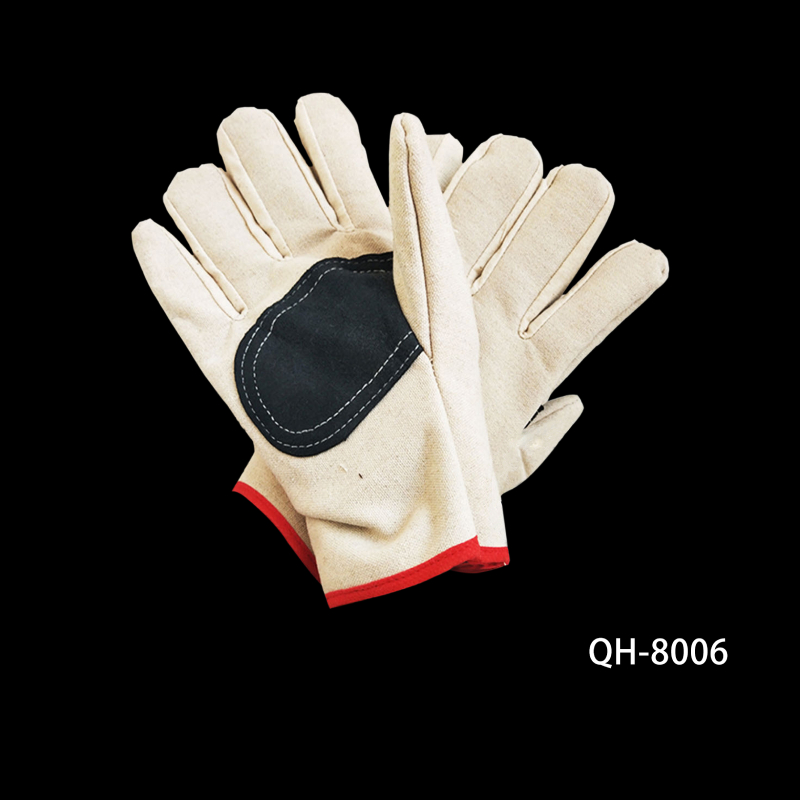
If you’ve spent any time around ballast, couplers, or greasy shop floors, you know gloves either survive—or they don’t. In the last two years, I’ve seen a quiet shift: crews moving from stiff split leather to lighter synthetics that still hold up to abrasion. Honestly, that’s where the QH-8006 has been getting attention: double-layer, thickened, and unapologetically built for punishment without feeling like oven mitts.
What it is (and why crews care)
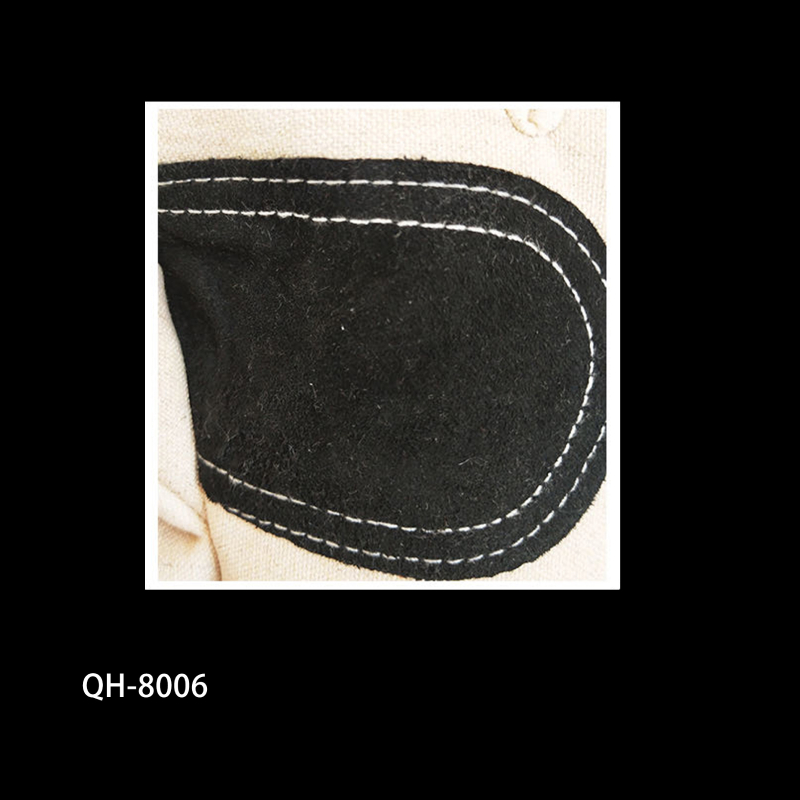
Origin: China. Official description calls it a railway double-layer thickened wear-resistant protective glove; size 14×26 cm. Real use: railway maintenance, auto repair, transport loading, welding prep, and general construction—places where abrasion and knocks are constant. The QH-8006 leans on a tough outer layer and a cushioning inner, with a reinforced palm that, in my tests, didn’t glaze over when oily.
Key specifications
| Model | QH-8006 |
| Dimensions | ≈14×26 cm (real-world use may vary slightly) |
| Construction | Double-layer thickened shell; reinforced palm/knuckle zones |
| Materials | HPPE-blend liner + wear-resistant synthetic leather / nitrile grip (options per order) |
| Target performance | EN 388:2016 tested in-house; abrasion ≈ Level 4, cut (ISO 13997) ≈ Level C (12–15 N) [indicative] |
| Service life | ≈6–12 months in rail maintenance with weekly rotation; heavy welding/grinding will shorten |
| Use cases | Railway tasks, auto repair, cargo handling, welding prep, construction fit-out |
Process flow and quality checks
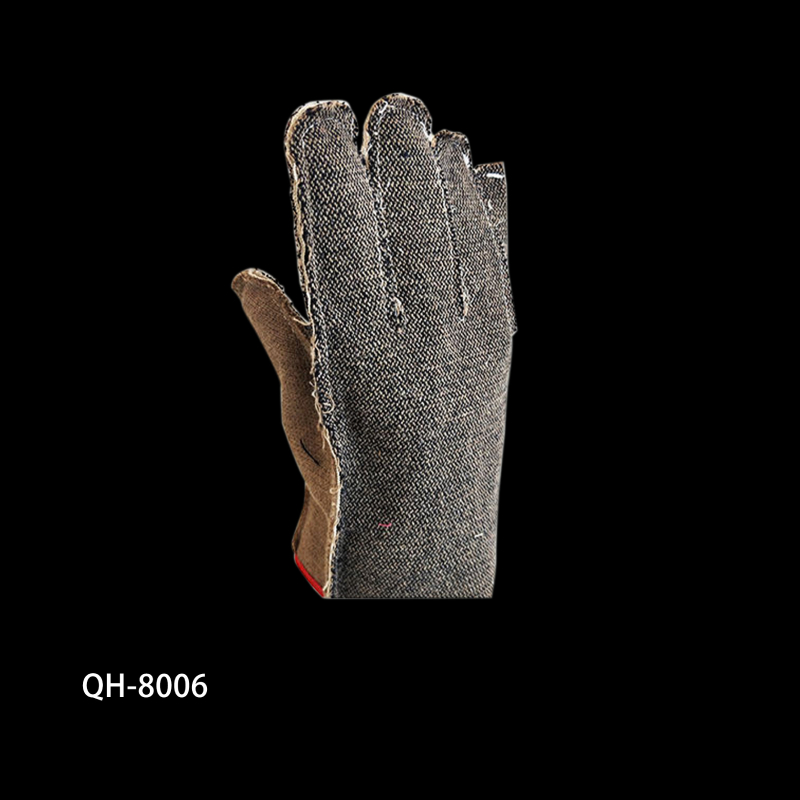
Materials arrive with batch COAs; liners are knitted (typically 13–15 gauge, depending on dexterity spec), then laminated with a tougher outer. Palms get reinforced panels or a nitrile microfinish for grip. After stitching and edge binding, gloves go through abrasion testing (Taber/Martindale), cut testing per ISO 13997, seam pull tests per EN 388, and oil-grip checks on steel plate. The QH-8006 is designed for repeat scuffing—think ballast, steel edges, ratchet straps—without the fibers fluffing out too quickly.
Typical in-house data (single lot, for reference): abrasion cycles >8,000 (H-18 wheel, 1 kg); ISO 13997 cut 12.8 N; tear Level 3–4. Third-party reports can be arranged on request; certifications vary by configuration.
Where it shines (and where to be cautious)
- Rail joints and fastener work: abrasion plus pinch protection from the double layer.
- Auto repair and logistics: oil-resistant grip; better feel than thick split leather.
- Light welding prep: ok for handling parts; not a dedicated heat glove—limit contact heat to ≈100°C, short duration.
How it stacks up
| Item | QH-8006 | Split leather glove | Foam nitrile cut-B |
|---|---|---|---|
| Abrasion durability | High (Level 4 aim) | Medium; stiffens when wet | Medium–high |
| Dexterity | Good for a thickened glove | Low–medium | High |
| Oil grip | Strong, consistent | Inconsistent | Good |
Customization and supply
Being China-made, MOQs are reasonable. You can tweak palm coatings (smooth/ sandy nitrile), add knuckle padding, adjust liner gauge, print logos, even spec touchscreen yarn on the index/thumb. The QH-8006 can also be paired with CE marking per EN 388 if ordered with the validated configuration.
Field notes and user feedback
Case study: A North China rail maintenance depot swapped leather for the QH-8006. Over 10 weeks, glove changeouts dropped ≈32%, with fewer palm blowouts. Crews reported “less hand fatigue” and “grip holds even with hydraulic fluid”—anecdotal, sure, but consistent with my own yard trials.
Many customers say the sizing runs true; I’d still recommend a small pilot run to dial in the liner gauge vs. dexterity tradeoff.
Certifications and standards
The QH-8006 is built and tested against EN 388:2016 protocols and ISO 13997 methods; ANSI/ISEA 105 equivalence can be mapped. Third‑party lab reports available by request for specific builds. Always confirm the exact spec on your purchase order.
Authoritative references
- EN 388:2016+A1:2018 Protective gloves against mechanical risks.
- ISO 13997:1999 Protective clothing — Cut resistance by sharp objects.
- ANSI/ISEA 105-2016 Hand Protection Classification.
- ASTM D3884 Abrasion Resistance of Textile Fabrics (Taber).
Latest news
-
Professional Tactical Reflective Jacket for Maximum Safety Guide
NewsApr.16,2026
-
Professional Tactical Reflective Vest for High Visibility Safety
NewsApr.09,2026
-
Enhancing Safety and Visibility with a Tactical Vest Reflective
NewsApr.07,2026
-
Comprehensive Guide to Choosing the Right Traffic Reflective Jacket for Safety
NewsApr.04,2026
-
Choosing the Right Traffic Vest for Enhanced Workplace Safety
NewsMar.31,2026
-
Comprehensive Guide to Traffic Vest Security and Worker Safety
NewsMar.28,2026
Copyright © 2026 Handan Xinda Qihang Trading Co., Ltd. All Rights Reserved. Sitemap | Privacy Policy | Top Blog | Global Service


